תמג יוד (127I)
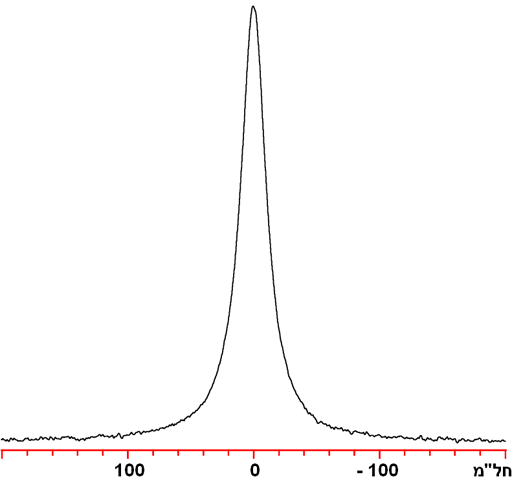
ליוד (I) יש גרעין אחד פעיל תמ"ג, 127I עם טווח היסט כימי רחב מאוד. לגרעין רגישות בינונית-גבוהה אך הוא ארבע קוטבי שנותן סיגנלים רחבים מאוד בסיסה סימטרית (תרשים 1) וסיגנלים רחבים מדי כדי לראות בספקטרומטר רגיל אפילו בסביבה הצתבריוית יוניות ותרכובות קטנות. זמן הרלקסציה של יון I4- נמדד כ-110 ננושניות, שמתאים לרוחב קו של 6 מגהרץ, הרבה יותר מדי רחב כדי להיראות בספקטרומטר רגיל. כתוצאה מכך, תמ"ג 127I מוגבל לחקר רלקסציה של קישור אניוני יודיד.
תרשים 1. ספקטרום תמ"ג 127I של KI (1 M) ב-D2O
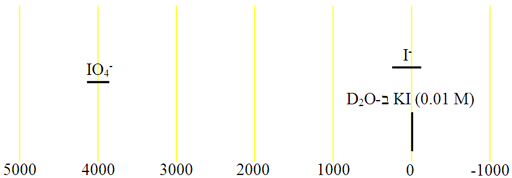
אין הרבה מידה על ההיסטים הכימיים שלו (תרשים 2).
תרשים 2. טווחי היסט כימי של תמ"ג יוד
תכונות גרעין ה-127I
| תכונה | ערך |
|---|---|
| ספין | 5/2 |
| שכיחות בטבע | 100% |
| תחום ההיסט הכימי | 4200 ppm, בין -4100 ל-100 |
| יחס התדירויות (Ξ) | 20.007486% |
| חומר יחוס (נקודת אפס יחסית) | KI (0.01 M) ב-D2O |
| רוחב פס של חומר הייחוס | 1926 הרץ |
| זמן התפוגה T1 של חומר הייחוס | 0.000135 שניות |
| רגישות יחסית ל-1H בשכיחות טבעית | 0.0954 |
| רגישות יחסית ל-1H כאשר מועשר | 0.0954 |
| רגישות יחסית ל-13C בשכיחות טבעית | 560 |
| רגישות יחסית ל-13C כאשר מועשר | 560 |
| פרמטר רוחב פס | 1600 fm4 |
מקורות
- C. Hall, "Application of chlorine, bromine, and iodine NMR spectroscopy to the study of physicochemical processes in liquids", Q. Rev., Chem. Soc., 25, 87-109 (1971).
- "NMR, Basic Principles and Progress, Vol. 12: Chlorine, Bromine and Iodine NMR. Physico-Chemical and Biological Applications", P. Diehl, E. Fluck, and R. Kosfeld, Eds., Springer Verlag, 368 pp. (1976).
- T. Drakenberg and S. Forsen, "[NMR of] the halogens - chlorine, bromine, and iodine" NATO ASI Series, Series C: Mathematical and Physical Sciences 103 (Multinucl. Approach NMR Spectrosc.), 405-44 (1983).
בטיחות
הוראת בטיחות: חלק מהחומרים המוזכרים כאן מסוכנים מאוד, יש להתייעץ עם נאמן בטיחות או כימאי לפני העבודה אתם . כאשר החומרים אינם מוכרים על נאמן הבטיחות או הכימאי לחפש בספרות המקצועית מידע בקשר אליהם. הממסים המשמשים לבדיקות תמ"ג הם ברובם דליקים ורעילים. TMS לדוגמא רעיל ודליק, יש להשתמש בכפפות ולעבוד במנדף. במיוחד, בחיוחד, יודיד רעיל במנות גדולות. מצבי חימצון אחרים יותר רעילים: כבוש כפפות מגן.