2006/10/30
Dear All,
The Hebrew message is followed by an English translation.
לפי התחזיות הופעת הירח ביום ב' א' חשון תשס"ז לא הייתה ניתנת לראייה מהארץ משום שהירח היה נמוך מדי על האופק בזמן הראייה. במונחים אסטרונומיים השמיים לא היו חשוכים מספיק לפני שהירח שקע. להחשכת השמיים נוהגים להשתמש במדדים הפרש הרום בין השמש והירח, שהייה (הזמן בין שקיעות השמש והירח) וקשת ראייה (שהיא במעלות השהייה בדקות לחלק ארבע). המדד של החשכה על ידי שהייה וקשת ראייה תלוי גם ברוחב גיאוגרפי אבל כל עוד מגבילים אותו לטווח מסוים (°29 עד °35 עבור ארץ ישראל) ניתן להשתמש במדדים אלה.
בכל זאת לא היינו בטוחים בתחזית משום שרוב
המאמצים לראות ירחים קשים לראיה התמקדו בירחים צעירים דווקא ולא ירחים ישנים יותר בעלי
שהייה קצרה. לכן מועט מספר רישומי תצפיות עם הגיאומטריה הזו. לכן נסענו (אני
ושלושה מילדיי) 300 ק"מ להר חזקיהו בדרום הארץ כדי לבדוק אם בכל זאת ניתן
לראות את הירח.
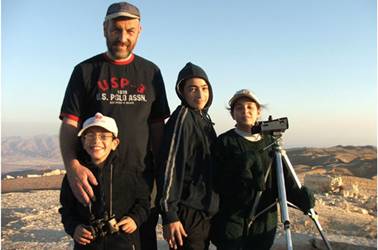
אני והילדים (מימין לשמאל: רינה, יהונתן ועקיבא) מתכוננים לתצפית בהר
חזקיהו
הר חזקיהו הוא אחד המקומות הטובים אם לא הטוב
ביותר בארץ לתצפית בירח בגלל מזג האוויר היבש, חוסר זיהום וגובה המקום מעל פני
הים. גם עובדה שהוא דרומי נותן יתרון גיאומטרי לתצפית באופן כללי. הר חזקיהו נמצא
ברוחב "37 '38 °29 צ', באורך "42 '52 °34 מזרח וגובה 833 מ'. עבור התצפית,
הפרש הרומים (0.6 זמן השהייה אחרי שקיעת השמש) היה '15 °6, השהייה הייתה 29 ד' 52
ש' וקשת ראייה (20 דקות אחרי שקיעת השמש) הייתה '28°7. השיא לראייה בעין מהארץ היה
הפרש רומים '38°6, שהייה 31 ד' 12 ש' וקשת ראייה '48 °7 ובמקרה זה הירח היה רחוק
יותר מהשמש. התצפית הזאת הייתה של דוד בלחסן תלמי אליהו ('14 °31 צ', '26 °34
מזרח, 140 מ') בג' תשרי תש"ן.
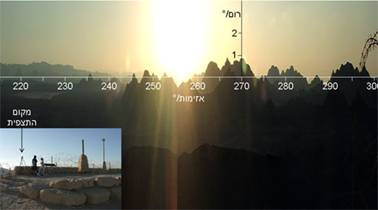
לפני השקיעה כיילתי את האזימות (כיוון) ממקום
השמש וצילמתי את קו האופק. התמונה להלן יכולה לשמש לכוון תצפיות עתידות מהמקום.
קו האופק בהר חזקיהו. הסכלה האנכי מוגדל פי חמש
צילמתי תמונות לא דחוסות (raw) כדי
לאפשר ניתוח מלא אחר כך.
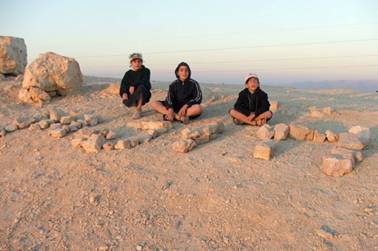
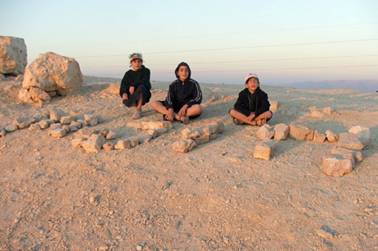
לפני השקיעה הילדים שלי הספיקו להשאיר את
החותמת שלהם באבנים על ההר. משום שאין הרבה גשם, היא עשויה להישאר שם זמן רב. חפשו
אותו בצד הדרומי של התצפית אם תהיו שם.
הילדים עם שם 'הופמן' באבנים
השמש שקעה ב-17:01:05. השמיים היו בהירים לגמרי
למעט קצת אובך עד למעלה אחת מעל האופק. חיפשנו את הירח בעזרת משקפת 10 על 50
מ"מ ובעין בלתי מזוינת. לא ראינו את הירח. תנאי מזג האוויר היו טמפרטורה °20,
לחות 41% ולחץ 919 מיליבר.
בגלל הרוחות רוב התמונות קצת מטושטשות מחמת
תזוזה. בניתוח התמונה החדה ביותר שצולמה ב-17:18:30 מופיעה דמות חלשה ורועשת של
סהר הירח במקום ובצורה שהוא צפוי להיות.
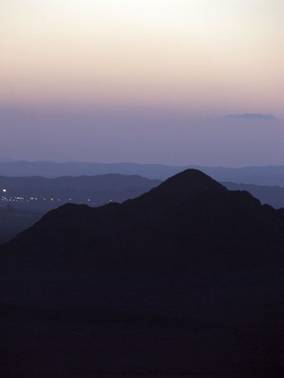
תמונה של האזור בו היה אמור להופיע הירח בשעה 17:18:30
אותה תמונה עם הגברה ניגוד בשמיים בערוץ הירוק דמות הירח מופיע בראש החץ
בצורה המצויר בזנב החץ
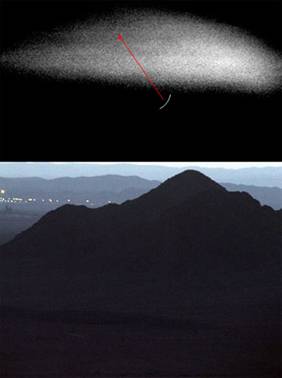
כדי להעריך אם הדמות אמיתית ניתן להשתמש בניתוח בייזיני.
דמות סהר הירח היא החזקה ביותר בשמיים בתמונה. לפי דיוק המדידה של הזוויות רום
ואזימות הירח אמור היה להופיע באזור קטן בתמונה, כחלק ב-60 מהשמיים בתמונה ואמור
להטות °23 מהאנך. הדמות כל כך חלשה דיוק הכיוון הוא רק °12± ולכן הוא מייצג אחד
מתוך שבעה כיוונים אפשריים. לכן ההסתברות שהדמות החזק ביותר בשמיים של התמונה
תהייה במקום הנכון ובכיוון הנכון באקראי היא אחד מתוך 420. לכן ההסתברות שהדמות
אמיתית היא 99.8%. במידה שהדמות אמיתית היא מעידה שחיפשנו במקום הנכון ובכל זאת
הירח היה חלש מדי כדי לראותו אפילו במשקפת. בשאר חלקי הארץ עננים הפריעו לתצפית.
כמו כן היו דיווחים מארה"ב של עננים באזור טוסון,
אריזונה וסנטניאל, קולורדו.
למחרת בילינו קצת באילת לפני שהתחלנו את הנסיעה
חזרה צפונה. עצרנו לתצפית נוספת בחניון צוקים על כביש 90 בק"מ ה-122 ברוחב
"57 '28 °30 צ', אורך "28 '10 °35 מזרח וגובה 30 מ'. היה ברור שהירח
ייראה. השאלה רק הייתה מה השעה המוקדמת ביותר שאפשר לראותו.
אנחנו מתכוננים לתצפית נוספת בחניון צוקים

היו עננים קרוב לאופק אבל הירח הופיע גבוה
יותר. השמש נעלמה מעל ההרים ב-16:43. אני ראיתי את הירח ראשון במשקפת ב-16:47
ובעין ב-16:50. יהונתן ראה אותו ב-16:51 ועקיבא ב-16:54. תנאי מזג האוויר היו
טמפרטורה °27, לחות 36% ולחץ 1008 מיליבר.
הירח ביום ג' ב' חשון תשס"ז ב-17:16
מחניון צוקים
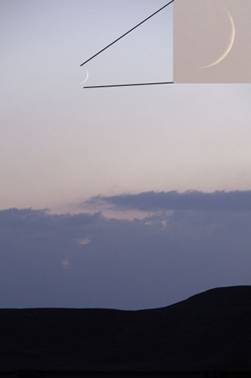
בינתיים בהר יואש
(ברוחב '35 °29 צ', אורך '53 °34 מזרח וגובה 734 מ') אליהו ורות כץ ראו את הירח
ב-16:51. באשדוד הירח גם נראה אבל בשאר חלקי הארץ היה מעונן.
בחודש הבא הירח יופיע בארץ ורוב העולם ביום ד' א'
כסלו תשס"ז ויהיה קל לראייה. ייתכן ראייה יום קודם בדרום אפריקה ובעזרת
טלסקופ טוב בדרום ארה"ב. בשוודיה לא ייתכן ראייה עד יום ה' ב' כסלו ואפילו זה
לא בטוח.
בברכה,
רוי.
According to prediction, the Moon was not
expected to be visible on Monday 23rd October 2006 from
Even so, we were not certain about our
predictions because most of the Moon-watching effort has gone into young Moons
and not older Moons with shorter lag times. Therefore records of such
observations are sparse. For this reason we (I and three of my children)
traveled 300 km to
Me and the children (from left to right: Akiva, Jonathan and Rina)
preparing for the observation on
Before sunset we calibrated the azimuth (bearing) to the Sun's position and I photographed the horizon. The picture below will be useful for future observations from the site.
The horizon at
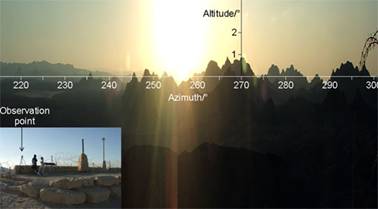
The photographs were taken in raw (uncompressed) mode to allow for full analysis later.
Before sunset, my children left their mark in stone on the mountain. Because there is little rain there, it is likely to stay there a long time. Look for it on the southern side of the observation point if you are ever there.
The children with the name 'Hoffman' (in Hebrew) in
stones
The Sun set at 17:01:05. The sky was completely clear except for a little haze up to 1° above the horizon. We searched for the Moon with 10×50 binoculars and with the naked eye. We did not see the Moon. The weather conditions were temperature 20°C, humidity 41% and pressure 919 mbar.
Because of the winds most of the photographs were a little blurred by movement. During analysis of the sharpest photograph that was taken at 17:18:30, a weak and noisy crescent appeared in the position and orientation expected for the Moon.
Picture of the region where the Moon was expected to
appear at 17:18:30
The same picture with the green channel of the sky
contrast enhanced. An image of the Moon appears at the head of the arrow in the
form drawn at the tail of the arrow.
In order to evaluate whether the
image is genuine one can use Bayesian
analysis. The crescent image is the strongest one in the sky of the
picture. The accuracy of the angular measurement of altitude and azimuth means
that the Moon is expected to appear only in a small region of the picture,
about 1/60 of the sky region and is supposed to subtend 23° to the vertical.
Because the image is so weak, this angle can only be measured to an accuracy of
±12° and so represents of seven possible orientations. Therefore the
probability that the strongest image is in the correct region and in the
correct orientation by chance is one in 420. As a result the probability that
this image is the Moon is 99.8%. If this image is genuine it shows that we
searched in the right place and that the Moon was too weak to been seen even
with binoculars. In the rest of
The next day we enjoyed Eilat before starting the journey north. We stopped for another observation at the Tsukim parking lot on route 90 at the 122 km mark, latitude 30° 28' 57" N, longitude 35° 10' 28" E and height 30 m. It was obvious that the Moon would appear. The only question was what would be the earliest time that it would be visible.
Us preparing for another observation at the Tsukim parking lot.
There were clouds near the horizon but the Moon appeared higher up. The Sun disappeared over the mountains at 16:43. I saw the Moon first with binoculars at 16:47 and with the naked eye at 16:50. Jonathan saw it at 16:51 and Akiva at 16:54. The weather conditions were temperature 27°, humidity 36% and pressure 1008 mbar.
The Moon on Tuesday 24th October 2006 at
17:16 from the Tsukim parking lot.
In the meantime, at
Next month the New Moon can be seen
from
Regards,